A new door appears on a finished map. Its cartographer went through yesterday; today the map begins erasing the roads behind him.
Open adventureOne district floods while another has no drinking water. Rooftop cisterns hum at night, and the rain collector refuses to open his valve house.
One district floods while another has no drinking water. Rooftop cisterns hum at night, and the rain collector refuses to open his valve house.
Asha turns a dry tap. Above her, water spills from a rooftop gutter that never used to flow.
The low pipe dried on the same night the high cistern began overflowing.
GM book · 1.0.0 · 120-minute plan · 4 players
One district floods while another has no drinking water. Rooftop cisterns hum at night, and the rain collector refuses to open his valve house.
Content notice: Flooding and water shortage; no health or engineering claims apply outside this fictional setting.
Collector Jun locked a balancing valve after finding a crack in the low district’s pipe. His temporary diversion overloaded the high cistern. A sleeve repair permits equal flow; moving water by public carts avoids both pipes but consumes the town’s transport capacity.
Use your own rules or play without dice. State the goal, choose an approach, explain a reasonable cost and let the players decide. Plausible careful actions succeed; uncertain actions can succeed with delay, spent supplies or a favour owed. Evidence is always available through its described action. Each player creates an ordinary person with a useful skill, a reason to help, and an item. No character sheet, monster statistics or proprietary rulebook is needed.
Take 10 minutes to introduce characters, read the premise and discuss the content notice. Anyone may say “pause”, pass on a description, or ask to move an uncomfortable moment offstage. Agree on no combat and on treating consequences as delay or repair, not permanent harm. Give one player the route map and another the time sheet.
Follow both investigations; take the break before the immediate problem.
Total: 120 minutes.
Place: Dry square
Asha turns a dry tap. Above her, water spills from a rooftop gutter that never used to flow.
The flows were diverted, not lost. Cart distribution bypasses the damaged pipe. Begin with the concrete request in the premise. Ask each character why they care and give them one ordinary useful item. Read both public observations without requiring a roll. Explain that the marked routes are safe to investigate, and offer a choice of the records or the visible trail. Let the group appoint a map reader; do not use hidden travel rolls to block the first lead.
If conversation or a test fails, give the public card anyway. A clear sign points to Valve house. A missing method can be found again at High cistern; no character skill is required.
Asha: Provide water to the dry square Offers directions and ordinary transport for news of the outcome. Voice: Patient, concrete sentences; ask one practical question.
Timeline record: The low pipe dried on the same night the high cistern began overflowing.
Give it: Inspect the visible labelled object. Give its full text automatically; a check affects time or extra colour only.
GM inference: The flows were diverted, not lost.
Fallback instruction: Public water carts accept the cistern’s drain hose.
Give it: Inspect the visible labelled object. Give its full text automatically; a check affects time or extra colour only.
GM inference: Cart distribution bypasses the damaged pipe.
Continue: Records and tools or An independent trail
Place: Pipe workshop
Bo rolls a copper sleeve across the bench. It has the same diameter as the district pipe.
A repair allows equal flow to both districts. The collector is at the valve house. Put the method card and destination note on the table. Ask what the two objects suggest, then answer direct practical questions from their wording. The maker can trade tools for help carrying or recording them, but refusal never removes these public documents. The trail remains another route. A check, if your rules use one, changes the time or tidiness of the work rather than whether this evidence exists.
If conversation or a test fails, give the public card anyway. A clear sign points to Valve house. A missing method can be found again at High cistern; no character skill is required.
Bo: Fit a safe sleeve without hiding the crack Lends supplies if a character helps carry or catalogue them. Public instructions remain available. Voice: Quick, exact words; point at tools while speaking.
Method diagram: Sleeve the marked crack, then open both balancing wheels by equal quarter-turns.
Give it: Inspect the visible labelled object. Give its full text automatically; a check affects time or extra colour only.
GM inference: A repair allows equal flow to both districts.
Destination note: Jun’s delivery docket is stamped VALVE HOUSE.
Give it: Inspect the visible labelled object. Give its full text automatically; a check affects time or extra colour only.
GM inference: The collector is at the valve house.
Continue: An independent trail or The immediate problem
Place: Roof walk
Wren ties bright cloth around a railing. The roof walk shakes whenever the high cistern hums.
A visible maintenance trail locates Jun. A witness supplies another route. Describe the physical trail before asking for a decision. The witness tells what they actually observed and admits what they did not see. If the group refuses conversation, the physical route supplies the destination. Let a character compare the timeline and another trace the map. For a divided group, take one short turn per side, then reunite at the meeting; do not add another travel encounter.
If conversation or a test fails, give the public card anyway. A clear sign points to Valve house. A missing method can be found again at High cistern; no character skill is required.
Wren: Keep the roof walk clear for a rescue line Guides the party if they share a plan. If refused, points to the visible trail. Voice: Cautious, distinguish observation from assumption.
Physical trail: Fresh wheel grease marks the roof rail leading toward the valve house.
Give it: Inspect the visible labelled object. Give its full text automatically; a check affects time or extra colour only.
GM inference: A visible maintenance trail locates Jun.
Witness statement: Wren saw Jun carry the district map to the valve house.
Give it: Ask any direct question, or read the witness’s signed statement if conversation is refused.
GM inference: A witness supplies another route.
Continue: Records and tools or The immediate problem
Place: Valve house
Jun presses a map against a closed wheel. One line is marked CRACK; another is marked TOO FULL.
Collector Jun locked a balancing valve after finding a crack in the low district’s pipe. His temporary diversion overloaded the high cistern. A sleeve repair permits equal flow; moving water by public carts avoids both pipes but consumes the town’s transport capacity. State the immediate stakes and offer both listed approaches. Before resolving action, ask who observes, who acts and who helps. Make any cost visible before a player accepts it. Avoid demanding a special ability or spell. When a plan fails, use the slower listed route and mark its time cost; people remain recoverable. Once the goal is safe, mark the immediate goal safe and continue. A refusal by the keeper cannot hide the marked safety instructions.
Close the balance wheel, fit the sleeve, then drain the excess slowly. Explain a five-minute delay before they accept it; mark the immediate goal safe when the people or resource are secured.
Jun: Explain his diversion before somebody opens the wrong valve Explains both solutions when the party agrees to protect the immediate goal; the marked instructions are available regardless. Voice: Calm under pressure; admit the decision and its cost.
Safety marks: Drain first while someone watches the lip; a closed drain and open balance can force water into the crack.
Give it: Inspect the visible labelled object. Give its full text automatically; a check affects time or extra colour only.
GM inference: Relieve pressure before restoring flow.
A delay leaves less time for the final repair or decision. Explain costs before resolving an action.
Approach A: Attach the drain hose to carts and open the drain under observation.
Approach B: Close the balance wheel, fit the sleeve, then drain the excess slowly.
4 players: Two pairs take observation and action tasks. Resolve them in two short alternating turns.
Mark the immediate goal safe after either safe approach; a setback costs time, not access to the next scene.
Continue: The final choice
Place: High cistern
The cistern’s overflow lip is already wet. Two arrows mark DRAIN TO CARTS and BALANCE TO PIPE.
A repair allows equal flow to both districts. Relieve pressure before restoring flow. Reveal the method and fallback together. Ask the group which tradeoff it accepts and give every character a small contribution. Mark the complete method for the first choice or the fallback method for the second. A risky improvisation should inherit one of these outcomes after its cost is explained, rather than create a third unprepared lock. Keep the immediate goal safe. Return by the known marked route; no new location needs to be invented.
Keep the damaged pipe closed and publish a cart delivery rota. Mark the fallback method, keep the immediate goal safe and read the cost ending. Do not repeat a failed test.
Bo: Fit a safe sleeve without hiding the crack Lends supplies if a character helps carry or catalogue them. Public instructions remain available. Voice: Quick, exact words; point at tools while speaking.
Jun: Explain his diversion before somebody opens the wrong valve Explains both solutions when the party agrees to protect the immediate goal; the marked instructions are available regardless. Voice: Calm under pressure; admit the decision and its cost.
Method diagram: Sleeve the marked crack, then open both balancing wheels by equal quarter-turns.
Give it: Inspect the visible labelled object. Give its full text automatically; a check affects time or extra colour only.
GM inference: A repair allows equal flow to both districts.
Fallback instruction: Public water carts accept the cistern’s drain hose.
Give it: Inspect the visible labelled object. Give its full text automatically; a check affects time or extra colour only.
GM inference: Cart distribution bypasses the damaged pipe.
The complete method preserves the planned service; the fallback preserves the immediate goal at a visible cost.
Approach A: Fit the sleeve and reopen both balancing wheels equally.
Approach B: Keep the damaged pipe closed and publish a cart delivery rota.
4 players: Work in two pairs, one following the method and the other preparing a fallback or record.
Mark the complete method for the first approach or the fallback method for the second. Both allow return and an ending.
Continue: Home and aftermath
Place: Dry square
Carts gather beneath the square’s taps. People watch the first cup fill before they begin discussing blame.
Choose a complete resolution or a resolution with a cost, then ask the group what happens next. Read the ending matching the selected outcome. Invite each character to add one ordinary detail to the aftermath, then ask the keeper for a concrete next action. Record who accepted the cost and which clues went unused. Spend the last few minutes on one enjoyable moment and one thing to change next time. Characters need not solve every optional inference to earn a resolved ending.
If no method was chosen, first confirm the immediate goal is safe, use the final fallback method and then read the cost ending. Record the unresolved work and give every character an epilogue.
Asha: Provide water to the dry square Offers directions and ordinary transport for news of the outcome. Voice: Patient, concrete sentences; ask one practical question.
Jun: Explain his diversion before somebody opens the wrong valve Explains both solutions when the party agrees to protect the immediate goal; the marked instructions are available regardless. Voice: Calm under pressure; admit the decision and its cost.
No new evidence required.
Continue: Read an ending and close the session.
Both districts’ taps run at the same modest pressure. Jun posts the crack and repair on the public map, and the cistern stops humming.
First secure the immediate goal at Valve house. Choose this ending only after final method A is used at High cistern.
The carts deliver clean water street by street. The pipes wait for repair, and the town must postpone other deliveries to keep the rota running.
First secure the immediate goal at Valve house. Choose this ending only after final method B is used at High cistern.
The flows were diverted, not lost.
Timeline record
Proceed to Valve house
Destination note OR Physical trail OR Witness statement
Relieve pressure before restoring flow.
Safety marks · the marked safety instructions supply a fallback.
Choose a fair water supply before the next rain.
Method diagram OR Fallback instruction
h-order: The flows were diverted, not lost.
h-fallback: Cart distribution bypasses the damaged pipe.
h-method: A repair allows equal flow to both districts.
h-note: The collector is at the valve house.
h-trail: A visible maintenance trail locates Jun.
h-witness: A witness supplies another route.
h-safe: Relieve pressure before restoring flow.
Record the ending, one memorable choice, and any unresolved work. Ask what was enjoyable and what needs to change. The time plan is a starting point; adapt it to your group.
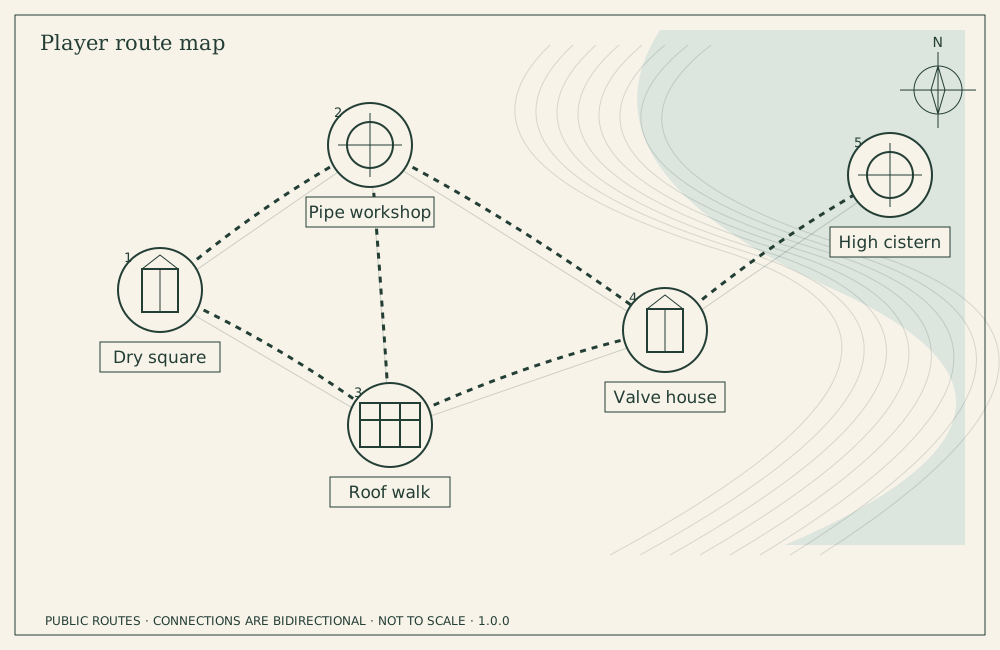
Start at Dry square. Pipe workshop and Roof walk are independent investigation routes; both connect to Valve house, which leads to High cistern. All marked connections are bidirectional. Return uses the known route to Dry square.
At Valve house, the marked entrance reaches the immediate problem. Approach A: Attach the drain hose to carts and open the drain under observation. Approach B: Close the balance wheel, fit the sleeve, then drain the excess slowly. Both reach the onward route. Layout is schematic, with no combat grid or movement scale.
Original AI-assisted fiction. Use and adapt at your own table. Public redistribution and publication terms are to be set by the owner. This package includes no proprietary game rules.
A new door appears on a finished map. Its cartographer went through yesterday; today the map begins erasing the roads behind him.
Open adventure
A lighthouse shines among the trees. Migrating birds circle it instead of finding their river, while its keeper insists the light saved a lost child.
Open adventure